
Complete Guide to Starting a Dairy Business in India: From Investment to Profit
Published on: July 09, 2026 | Reading Time: 8 minutes
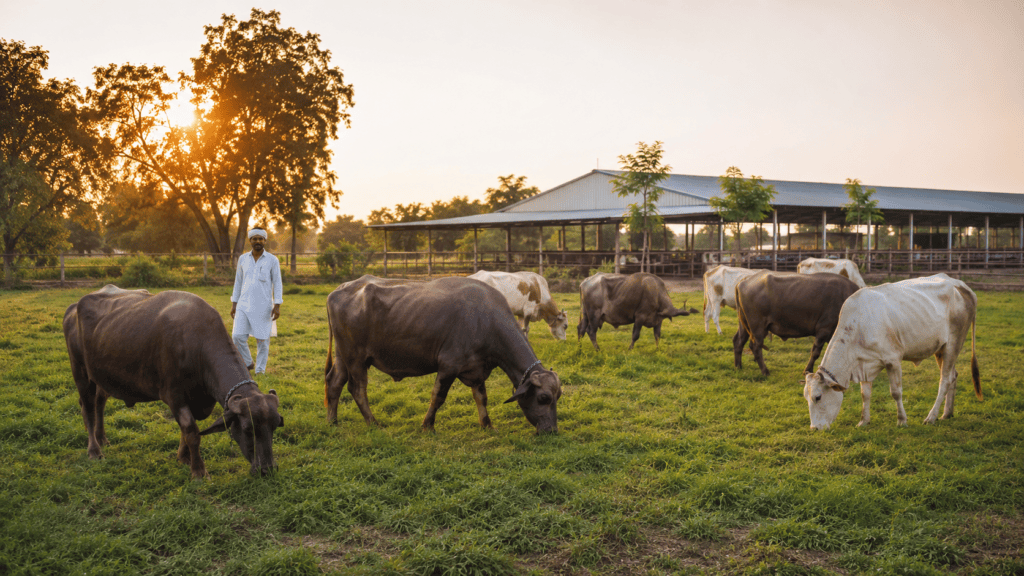
India is the world’s largest milk producer, contributing over 22% of global milk production. The dairy sector in India is not just a business; it’s a way of life for millions of farmers. With the growing demand for milk and dairy products, starting a dairy business has become one of the most profitable ventures in the agricultural sector.
But here’s the question: How do you start a dairy business successfully? What investment do you need? Which licenses are required? How do you ensure profitability?
In this comprehensive guide, we’ll walk you through everything you need to know about starting a dairy business in India – from initial investment to daily operations, from licensing to marketing, and from animal selection to profit calculation.
Why Start a Dairy Business in India?
Before diving into the “how,” let’s understand the “why.” Here are compelling reasons to start a dairy business:
- Growing Demand: India’s milk consumption is increasing by 5-6% annually
- Recession-Proof: Milk is a daily necessity, unaffected by economic downturns
- Government Support: Multiple schemes and subsidies available for dairy farmers
- Diverse Revenue Streams: Milk, curd, paneer, ghee, butter, and more
- Scalable Business: Start small and grow as per your capacity

Step 1: Market Research – Know Your Local Market
The foundation of any successful business is thorough market research. Before investing a single rupee, you need to understand your local market dynamics.
What to Research:
- Demand Analysis:
- What’s the daily milk consumption in your area?
- Do people prefer buffalo milk or cow milk?
- Is there demand for value-added products like curd, paneer, ghee?
- Competitor Analysis:
- How many dairy businesses are already operating?
- What are their prices?
- What services do they offer?
- What are their weaknesses?
- Target Customers:
- Households, hotels, restaurants, sweet shops, or all?
- What’s their purchasing capacity?
- What quality standards do they expect?
Pro Tip: Visit local dairy shops, talk to existing dairy owners, and understand the ground reality before making any decisions.
Step 2: Create a Solid Business Plan
A business plan is your roadmap to success. It helps you visualize your business, plan finances, and make informed decisions.
Key Components of Your Dairy Business Plan:
| Component | Details to Include |
|---|---|
| Business Model | Milk only or value-added products too? |
| Target Market | B2C (households) or B2B (hotels, shops)? |
| Budget | Total investment and break-even timeline |
| Marketing Strategy | How will you attract customers? |
| Growth Plan | 1-year, 3-year, 5-year goals |
Step 3: Calculate Your Investment Budget
One of the most common questions is: “How much money do I need to start a dairy business?”
The answer depends on the scale of your operation. Let’s break down the investment for a small dairy farm (5-10 animals):
Investment Breakdown for Small Dairy Farm:
| Expense Category | Estimated Amount (₹) |
|---|---|
| Animal Purchase (5-10 buffaloes/cows) | 3,00,000 – 5,00,000 |
| Shed Construction | 1,00,000 – 2,00,000 |
| Feed & Fodder (3 months) | 50,000 – 1,00,000 |
| Equipment (Milking machines, containers) | 30,000 – 50,000 |
| Licenses & Registration | 10,000 – 20,000 |
| Marketing & Branding | 20,000 – 30,000 |
| Working Capital | 1,00,000 – 2,00,000 |
| Total Investment | ₹6,10,000 – ₹12,00,000 |
Pro Tip: Start small. You can always expand as your business grows. Don’t over-invest initially.

Step 4: Choose the Right Location
Location can make or break your dairy business. Here’s what to consider:
Key Location Factors:
- Distance from City: Not too far, but away from noise and pollution
- Water Availability: Clean water for animals and cleaning
- Electricity Supply: Reliable power for refrigeration and equipment
- Transportation: Good road connectivity for milk delivery
- Space: Minimum 1000-1500 sq. ft. for 5-10 animals
- Veterinary Access: Nearby veterinary hospital or doctor
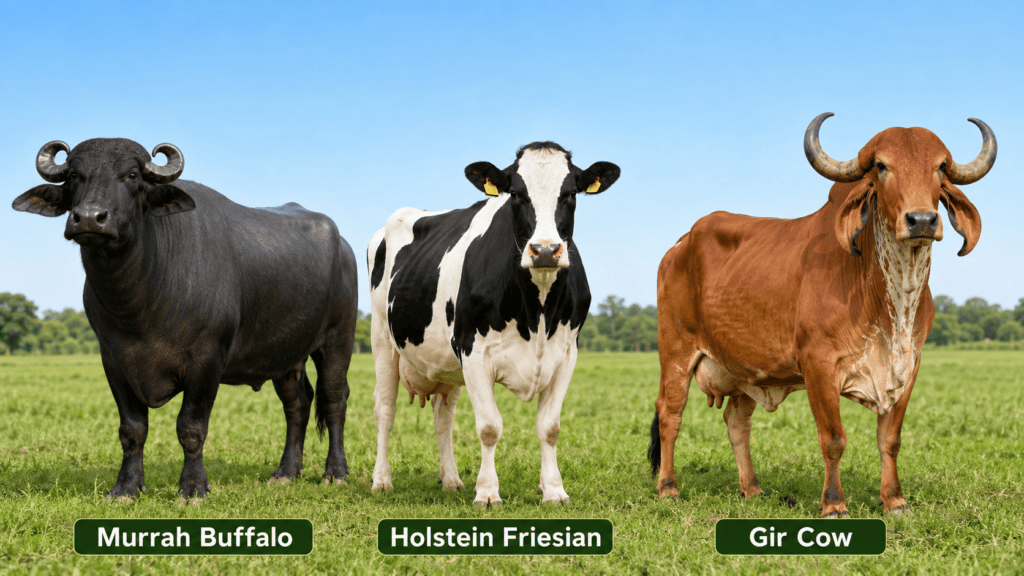
Step 5: Select the Right Breed of Animals
The breed you choose directly impacts your milk production and profitability. Here are the best breeds in India:
Best Cow Breeds for Dairy Farming:
| Breed | Daily Milk Production | Special Features |
|---|---|---|
| Gir | 8-12 liters | Disease resistant, good for hot climate |
| Sahiwal | 10-15 liters | High yielder, adaptable |
| Holstein Friesian (HF) | 15-20 liters | Highest yielder, needs good care |
| Jersey | 10-15 liters | High fat content, smaller size |
Best Buffalo Breeds for Dairy Farming:
| Breed | Daily Milk Production | Special Features |
|---|---|---|
| Murrah | 8-12 liters | High fat content (7-8%) |
| Jafarabadi | 10-15 liters | Large size, good yielder |
| Mehsana | 8-10 liters | Adaptable, low maintenance |
Pro Tip: Buy animals that are 3-5 years old and already giving milk. Avoid buying very young or very old animals.
Step 6: Get Required Licenses and Registrations
Legal compliance is crucial for running a dairy business smoothly. Here are the licenses you need:
Essential Licenses:
- FSSAI License: Food safety certification (mandatory)
- GST Registration: If turnover exceeds ₹20 lakhs
- Trade License: From local municipal corporation
- Animal Welfare Registration: From animal husbandry department
- NOC from Pollution Board: For larger farms
- Shop & Establishment Act: If opening a retail shop
Pro Tip: Consult a CA or lawyer to ensure all legal requirements are met.
Step 7: Animal Care and Management
The health of your animals directly impacts milk production and quality. Here’s how to take care of them:
Key Aspects of Animal Care:
- Balanced Diet: Green fodder, dry fodder, concentrates, and mineral supplements
- Clean Water: Fresh, clean water available 24/7
- Vaccination: Regular vaccination against FMD, HS, BQ, etc.
- Hygiene: Clean shed, regular bathing of animals
- Veterinary Care: Regular check-ups by a qualified vet
- Breeding Management: Proper breeding cycle management
Step 8: Milk Quality and Testing
Milk quality is your brand identity. Poor quality milk will ruin your reputation. Here’s how to ensure quality:
Quality Parameters to Check:
- Fat Content: Buffalo milk (6-8%), Cow milk (3-4%)
- SNF (Solid Not Fat): Minimum 8.5%
- Purity: No water adulteration
- Freshness: No souring or bacterial growth
- Hygiene: Clean milking process
Pro Tip: Use a lactometer and fat testing kit to check milk quality daily.

Step 9: Marketing and Customer Acquisition
Even the best milk won’t sell itself. You need effective marketing strategies.
Online Marketing:
- Create Facebook and Instagram pages
- Promote in local WhatsApp groups
- List on Google My Business
- Register on JustDial, Sulekha
- Create a professional website
Offline Marketing:
- Distribute pamphlets in your area
- Place ads in local newspapers
- Install hoardings at strategic locations
- Offer free samples to potential customers
- Partner with local shops and societies
Pro Tip: Offer a 1-week free trial to first 100 customers. Once they taste your quality, they’ll become regular customers.

Step 10: Billing and Accounting System
This is where most dairy businesses struggle. Managing daily sales, different rates, credit, and collections can be overwhelming.
Traditional Method (Paper-Based):
- Daily entries in register
- Monthly bill preparation
- Running around for credit collection
- High chances of errors
Modern Method (Dairy Management Software):
- Automatic billing
- WhatsApp/SMS bill delivery
- Real-time reports
- Credit tracking
- Milkman performance monitoring
PerfElite Dairy Management Software digitizes your entire business. You can manage everything from your mobile, anywhere, anytime. Learn more about our features.
How Much Profit Can You Expect?
Let’s calculate the potential profit for a dairy farm selling 100 liters of milk daily:
| Particulars | Amount (₹) |
|---|---|
| Daily Sales (100 liters × ₹50-60) | 5,000 – 6,000 |
| Monthly Sales | 1,50,000 – 1,80,000 |
| Monthly Expenses (Feed, Labor, Electricity) | 80,000 – 1,00,000 |
| Net Monthly Profit | ₹50,000 – ₹80,000 |
Pro Tip: If you sell value-added products like curd, paneer, ghee, your profit margin can increase to 40-50%.
Common Mistakes to Avoid
Many dairy businesses fail due to common mistakes. Here’s what to avoid:
- Over-investing initially: Start small, scale gradually
- Compromising on quality: Quality is your brand
- Ignoring animal health: Healthy animals = More milk
- Poor record keeping: Use software for accurate tracking
- No marketing strategy: Even the best product needs marketing
- Not managing credit properly: Credit can kill your cash flow
Government Schemes and Subsidies
The Indian government offers several schemes to support dairy farmers:
- Rashtriya Gokul Mission: For breed development
- National Dairy Plan: For infrastructure development
- Dairy Entrepreneurship Development: Financial assistance
- NABARD Schemes: Various loan schemes for dairy
- State-specific Schemes: Check your state government websites
Pro Tip: Visit your local animal husbandry office to know about available schemes in your area.
Conclusion: Is Dairy Business Profitable?
Yes, absolutely! The dairy business in India is highly profitable if managed properly. With the right planning, quality focus, and modern tools like Dairy Management Software, you can build a successful and sustainable business.
Remember, success in dairy business comes from:
- Quality products
- Customer satisfaction
- Efficient management
- Continuous learning
- Smart use of technology
Ready to Start Your Dairy Business?
If you’re serious about starting or growing your dairy business, the first step is to digitize your operations. Manual accounting is a thing of the past.
PerfElite Dairy Management Software helps you:
- ✅ Manage customers and milkmen
- ✅ Automatic billing and WhatsApp integration
- ✅ Track stock and expiry dates
- ✅ Monitor credit and collections
- ✅ Generate detailed reports
- ✅ Run your business from mobile
👉 Book Your Free Demo Today and see how PerfElite can transform your dairy business!
Frequently Asked Questions (FAQs)
Q1: How much land do I need for a dairy farm?
A: For 5-10 animals, you need minimum 1000-1500 sq. ft. of space.
Q2: Which is better – cow or buffalo?
A: Both have advantages. Buffalo milk has higher fat content and fetches better price. Cow milk is easier to digest. Choose based on your local market preference.
Q3: How long does it take to break even?
A: Typically 18-24 months, depending on your scale and management.
Q4: Do I need a license to start a dairy business?
A: Yes, FSSAI license is mandatory. Other licenses depend on your business scale.
Q5: Can I run a dairy business part-time?
A: Yes, you can start small with 2-3 animals and manage it part-time initially.
About the Author: This article is brought to you by PerfElite Dairy Management Software – India’s trusted solution for dairy business digitization. We help dairy owners manage their business efficiently and profitably.
Related Articles:
- 10 Ways to Increase Profit in Dairy Business
- Why Dairy Business Needs Software, Not Paper
- How to Check Milk Quality: Complete Guide
⚠️ Disclaimer
The information provided in this article is for educational and informational purposes only. Actual results may vary based on individual circumstances, location, animal breed, management practices, and market conditions. We do not guarantee any specific outcomes or profits.
We strongly recommend consulting with local veterinary experts, financial advisors, and dairy specialists before making any business decisions. PerfElite is not responsible for any losses or damages resulting from the use of information provided in this article.