
Published on: July 09, 2026 | Reading Time: 11 minutes
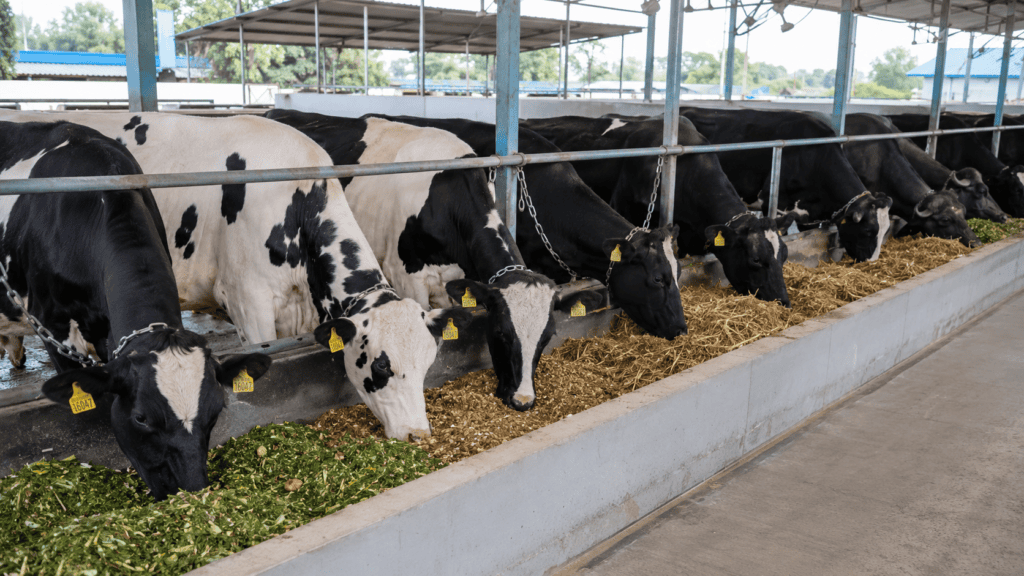
Feed accounts for 60-70% of your total dairy farming cost. Get it wrong, and you’ll lose money even with high milk production. Get it right, and you’ll maximize profits while keeping animals healthy.
Many dairy farmers make critical mistakes:
- ❌ Feeding the same ration to all animals
- ❌ Ignoring green fodder importance
- ❌ Over-relying on concentrates
- ❌ Not calculating feed cost per liter
- ❌ Poor feed storage leading to wastage
In this comprehensive guide, we’ll cover:
- ✅ Understanding dairy animal nutritional requirements
- ✅ Green fodder management (types, cultivation, yield)
- ✅ Concentrate feeding (formulation, cost, alternatives)
- ✅ Dry fodder and roughage management
- ✅ Feed supplements and additives
- ✅ Ration calculation for different stages
- ✅ Feed cost optimization strategies
- ✅ Storage and preservation techniques
Master feed management and reduce feed cost by 20-30% while increasing milk production by 15-20%!
Understanding Nutritional Requirements
Dairy animals need five essential nutrients:
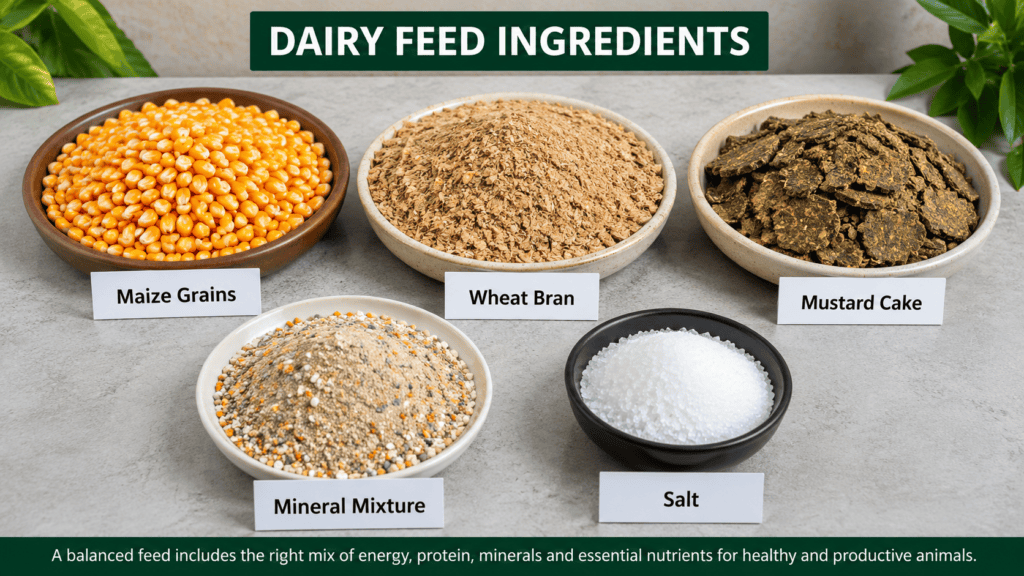
1. Nutrient Requirements Breakdown:
| Nutrient | Function | Source | Daily Requirement |
|---|---|---|---|
| Energy (TDN) | Milk production, body maintenance | Grains, green fodder | 50-60% of ration |
| Protein (DCP) | Milk protein, tissue building | Oil cakes, legumes | 10-16% of ration |
| Minerals | Bone health, metabolism | Mineral mixture | 50-100g/day |
| Vitamins | Immunity, reproduction | Green fodder, supplements | As per requirement |
| Water | Digestion, milk production | Clean drinking water | 50-100L/day |
2. Requirements by Production Stage:
| Stage | Maintenance + Production | TDN (kg/day) | DCP (g/day) |
|---|---|---|---|
| Dry Period | Maintenance only | 4-5 kg | 400-500g |
| Early Lactation | Maintenance + 10L milk | 7-8 kg | 800-1000g |
| Peak Lactation | Maintenance + 15L milk | 9-11 kg | 1100-1400g |
| Late Lactation | Maintenance + 5L milk | 6-7 kg | 600-800g |
| Pregnant Animal | + Last 3 months | +2 kg extra | +200g extra |
PART 1: GREEN FODDER MANAGEMENT
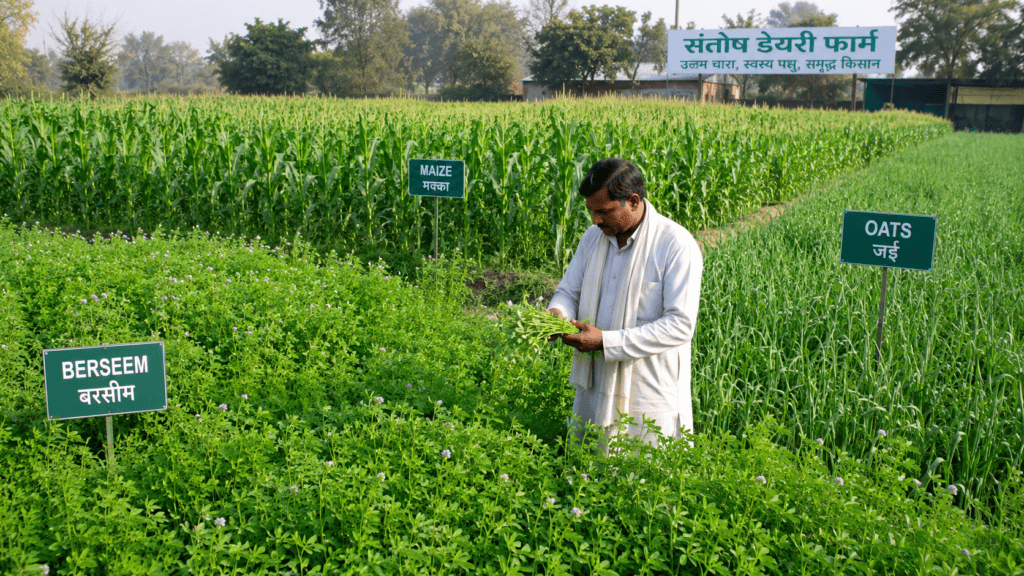
Green fodder is the backbone of dairy nutrition. It provides fiber, protein, vitamins, and minerals at the lowest cost.
Best Green Fodder Crops for India:
| Crop | Season | Yield/acre | Protein % | Cost/kg |
|---|---|---|---|---|
| Berseem (Egyptian Clover) | Winter (Oct-Mar) | 25-30 tons | 15-18% | ₹2-3 |
| Maize (Corn) | Summer/Kharif | 20-25 tons | 7-9% | ₹2-3 |
| Sorghum (Jowar) | Summer/Rainy | 20-30 tons | 8-10% | ₹2-3 |
| Oats | Winter (Nov-Apr) | 15-20 tons | 10-12% | ₹3-4 |
| Guinea Grass | Year-round | 100-150 tons/year | 8-10% | ₹2-3 |
| Hybrid Napier | Year-round | 150-200 tons/year | 9-11% | ₹2-3 |
Green Fodder Cultivation Guide:
For 10 Animals (Year-Round Supply):
| Season | Crop | Area Needed | Daily Feeding |
|---|---|---|---|
| Winter (Nov-Mar) | Berseem + Oats | 1 acre | 15-20 kg/animal |
| Summer (Apr-Jun) | Maize + Sorghum | 1 acre | 12-15 kg/animal |
| Rainy (Jul-Oct) | Guinea Grass/Napier | 0.5 acre | 15-20 kg/animal |
| Total Land | 2.5 acres | Year-round supply | Cost: ₹1-1.5 lakh/year |
Pro Tip: If you don’t have land, buy green fodder @ ₹2-3/kg. Cost for 10 animals: ₹3,000-4,000/month.
PART 2: CONCENTRATE FEEDING
Concentrates provide energy and protein for milk production. They’re expensive but essential.
Common Concentrate Ingredients:
| Ingredient | Protein % | Energy (TDN %) | Price/kg | Use In Ration |
|---|---|---|---|---|
| Maize/Corn | 8-9% | 80-82% | ₹18-20 | Energy source (40-50%) |
| Wheat Bran | 12-14% | 65-68% | ₹16-18 | Fiber + protein (20-30%) |
| Mustard Cake | 35-38% | 68-70% | ₹28-32 | Protein source (15-20%) |
| Cottonseed Cake | 20-23% | 70-72% | ₹24-28 | Protein + fat (15-20%) |
| Soybean Meal | 42-45% | 72-74% | ₹35-40 | High protein (10-15%) |
| Groundnut Cake | 40-45% | 70-72% | 32-36 | Protein source (10-15%) |
DIY Concentrate Mixture Formula:
For 10-12 Liters Milk Production:
| Ingredient | Percentage | Quantity (per 100kg) | Cost |
|---|---|---|---|
| Maize/Corn | 40% | 40 kg | ₹760 |
| Wheat Bran | 30% | 30 kg | 510 |
| Mustard Cake | 20% | 20 kg | ₹600 |
| Mineral Mixture | 2% | 2 kg | ₹60 |
| Salt | 1% | 1 kg | ₹10 |
| Bicarbonate | 2% | 2 kg | ₹40 |
| TOTAL | 100% | 100 kg | ₹1,980 |
| Cost per kg | 19.80/kg | ||
Feeding Rate: 1 kg concentrate per 2.5-3 liters milk + 2 kg for maintenance
Example: For Animal Giving 12 Liters Milk:
- Maintenance: 2 kg
- Production (12L ÷ 3): 4 kg
- Total Daily: 6 kg concentrate
- Cost/Day: 6 kg × ₹19.80 = ₹118.80
- Cost/Month: ₹3,564
PART 3: DRY FODDER (ROUGHAGE)
Dry fodder provides fiber for digestion and maintains rumen health.
Types of Dry Fodder:
| Type | Source | Cost/kg | Daily Requirement |
|---|---|---|---|
| Wheat Straw | Wheat crop residue | ₹6-8 | 5-8 kg/animal |
| Paddy Straw | Rice crop residue | ₹5-7 | 5-8 kg/animal |
| Bajra Stover | Pearl millet residue | 7-9 | 5-8 kg/animal |
| Legume Hay | Berseem/lucerne hay | ₹10-12 | 3-5 kg/animal |
Pro Tip: Treat poor-quality straw with urea (5% solution) to improve digestibility by 20-30%!
PART 4: FEED SUPPLEMENTS & ADDITIVES
Essential Supplements:
| Supplement | Purpose | Dose | Cost/Month |
|---|---|---|---|
| Mineral Mixture | Calcium, phosphorus, trace minerals | 50-100g/day | ₹150-300 |
| Vitamin ADE | Immunity, reproduction | As per vet advice | ₹100-200 |
| Probiotics | Improve digestion | 10-20g/day | ₹200-400 |
| Toxin Binder | Prevent mycotoxin effects | 10-20g/day | ₹150-300 |
| Bypass Fat | Energy for high yielders | 50-100g/day | ₹300-600 |
COMPLETE RATION CALCULATION
Example: For Cow Giving 15 Liters Milk/Day
| Feed Component | Quantity | Cost/kg | Daily Cost |
|---|---|---|---|
| Green Fodder (Maize/Berseem) | 15 kg | ₹2.50 | ₹37.50 |
| Dry Fodder (Wheat Straw) | 6 kg | ₹7 | 42 |
| Concentrate Mixture | 7 kg | ₹20 | ₹140 |
| Mineral Mixture | 100g | ₹30/kg | 3 |
| TOTAL DAILY COST | ₹222.50 | ||
| Cost per Liter Milk | ₹222.50 ÷ 15L = 14.83/liter | ||
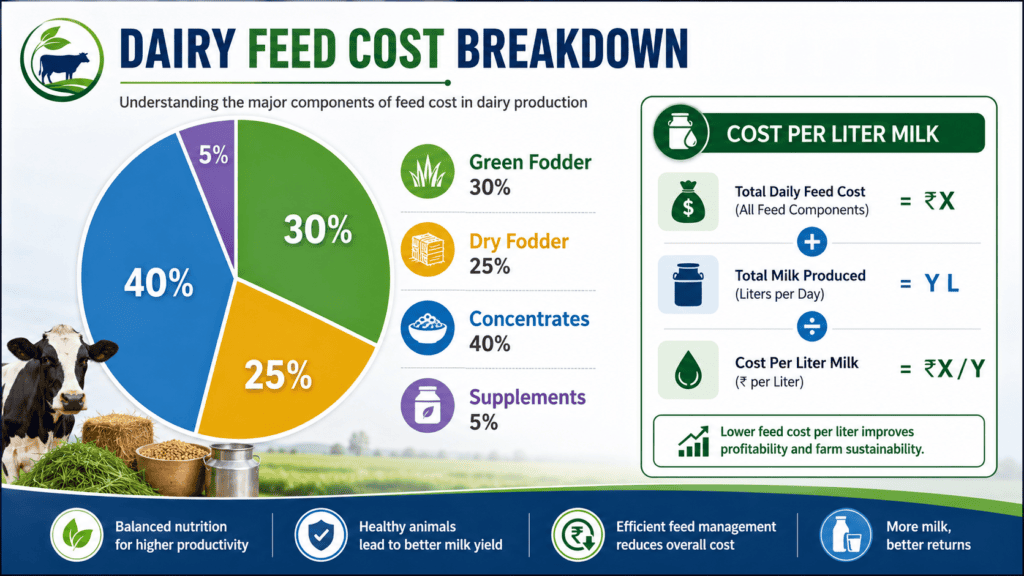
Profit Calculation:
- Milk Sale Price: ₹50/liter
- Feed Cost: ₹14.83/liter
- Gross Margin: ₹35.17/liter
- Daily Profit (15L): ₹527.55
- Monthly Profit: ₹15,826
Feed Cost Optimization Strategies
| Strategy | Implementation | Savings |
|---|---|---|
| Grow Your Own Fodder | 2.5 acres for 10 animals | ₹40,000-50,000/year |
| Make Your Own Mixture | Buy ingredients in bulk | ₹2-3/kg (15-20%) |
| Use Crop Residues | Treat straw with urea | Improve quality 30% |
| Silage Making | Preserve excess green fodder | ₹3-4/kg vs ₹8-10/kg dry season |
| Feed According to Production | Adjust concentrate based on milk | 500-1,000/month |
| Reduce Wastage | Proper storage, feed management | 10-15% savings |
Feed Storage & Preservation
Best Practices:
| Feed Type | Storage Method | Shelf Life | Key Points |
|---|---|---|---|
| Concentrates | Airtight containers, dry place | 3-6 months | Protect from moisture, rats |
| Dry Fodder | Raised platform, covered | 1-2 years | Keep off ground, ventilated |
| Silage | Silage pit/bags, anaerobic | 1-2 years | No air entry, compact well |
| Hay | Baled, covered shed | 1-2 years | Moisture <15%, no mold |
Conclusion: Feed Smart, Profit More!
Feed management is the key to dairy profitability. Remember:
- ✅ 60-70% of your cost is feed – optimize it!
- ✅ Green fodder is cheapest – grow or buy fresh
- ✅ Balance is critical – don’t over/under feed
- ✅ Calculate cost per liter – know your numbers
- ✅ Quality matters – don’t compromise on feed
Golden Rule: “Feed your animals for what they’re producing, not for what you hope they’ll produce!”
Need Help Managing Your Dairy Farm Feed?
Proper feed management requires careful tracking and planning. PerfElite Dairy Management Software helps you:
- ✅ Track feed inventory and consumption
- ✅ Calculate feed cost per animal/liter
- ✅ Set alerts for low stock
- ✅ Generate feed expense reports
- ✅ Optimize ration based on production
👉 Book Your FREE Demo Today and reduce your feed costs by 20-30%!
⚠️ Disclaimer
The information provided in this article is for educational purposes only. Actual feed requirements may vary based on animal breed, weight, production level, and local feed availability. We recommend consulting with a qualified veterinarian or animal nutritionist before making significant changes to your feeding program. PerfElite is not responsible for any losses or damages resulting from the use of this information.
Frequently Asked Questions (FAQs)
Q1: How much does it cost to feed one dairy animal per month?
A: For an animal giving 10-12 liters milk daily, expect ₹4,000-6,000/month (green fodder ₹1,500 + dry fodder ₹1,200 + concentrate ₹2,000 + supplements ₹300-500).
Q2: How much green fodder does a cow need daily?
A: 15-20 kg per day for adult cattle (approximately 3-4% of body weight). Buffalo needs 20-25 kg daily.
Q3: Can I feed only green fodder without concentrates?
A: No! Green fodder alone cannot meet energy/protein requirements for milk production. You need concentrates for optimal yield. Minimum 1 kg concentrate per 3 liters milk is essential.
Q4: Which is cheaper – buying feed or growing fodder?
A: Growing your own fodder is 40-50% cheaper. Cost: ₹2-3/kg (own) vs ₹6-8/kg (buying). However, it requires 2-3 acres of land for 10 animals.
Q5: How do I calculate feed cost per liter of milk?
A: Total daily feed cost ÷ Daily milk production = Cost per liter. Example: ₹222.50 ÷ 15L = ₹14.83/liter.
Q6: What is the best concentrate mixture for dairy animals?
A: Balanced mixture: 40% maize (energy), 30% wheat bran (fiber), 20% oil cake (protein), 2% mineral mixture, 1% salt, 2% bicarbonate. Cost: ₹18-22/kg.
Q7: How can I reduce feed costs without affecting milk production?
A: 1) Grow your own fodder, 2) Make your own concentrate mixture, 3) Use crop residues with urea treatment, 4) Make silage during abundance, 5) Feed according to actual production.
Q8: Is silage better than dry fodder?
A: Silage is nutritionally superior (higher protein, vitamins) and costs ₹3-4/kg vs dry fodder ₹6-8/kg. However, it requires proper storage facilities.
About the Author: This comprehensive guide is brought to you by PerfElite Dairy Management Software – helping dairy farmers across India optimize feed costs and maximize profitability through smart nutrition management.
Related Articles: