
Published on: July 09, 2026 | Reading Time: 10 minutes
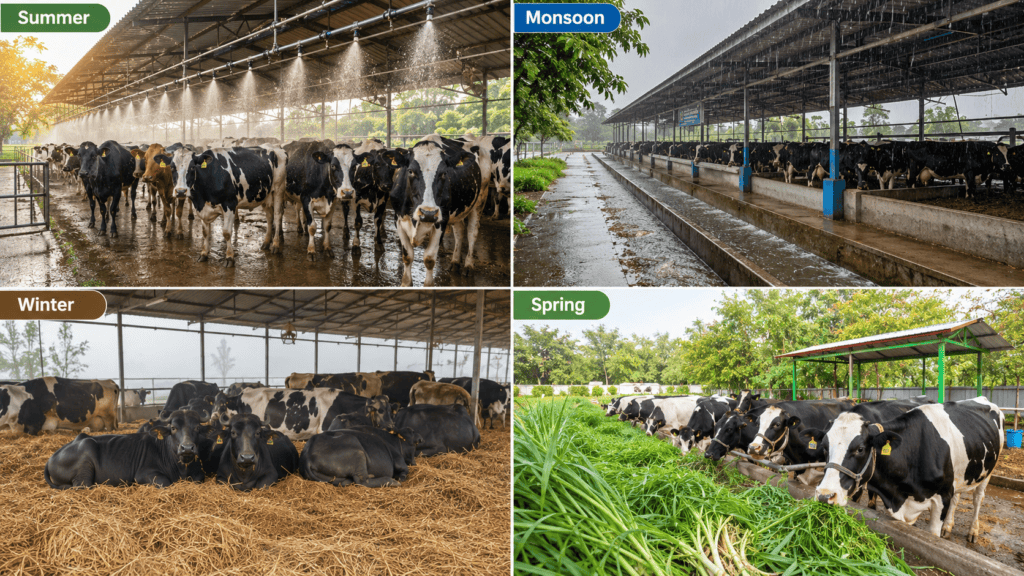
India’s diverse climate poses unique challenges for dairy farmers. Extreme summer heat, chilly winters, and heavy monsoons can reduce milk production by 20-30% if not managed properly.
Many dairy owners make the mistake of using the same management practices year-round, not realizing that each season requires specific care strategies.
In this comprehensive guide, we’ll cover:
- ✅ Summer management (March-June) – Heat stress solutions
- ✅ Monsoon management (July-September) – Disease prevention
- ✅ Winter management (October-February) – Cold stress care
- ✅ Seasonal feed and water management
- ✅ Housing adjustments for each season
- ✅ Health care calendar
- ✅ Cost-effective solutions
Master these seasonal strategies and maintain consistent milk production 365 days a year!
Why Seasonal Management Matters?
Seasonal changes directly impact your dairy business:
Impact of Seasons on Dairy Farming:
| Season | Production Drop | Main Challenges |
|---|---|---|
| Summer | 15-25% | Heat stress, dehydration, low feed intake |
| Monsoon | 10-20% | Diseases, foot problems, feed spoilage |
| Winter | 5-15% | Cold stress, respiratory issues, lower yield |
| Without Management | ₹50,000-1,00,000/year loss | Per 10 animals |
Good News: With proper seasonal management, you can reduce production drop to just 5-10%!
PART 1: SUMMER MANAGEMENT (March – June)
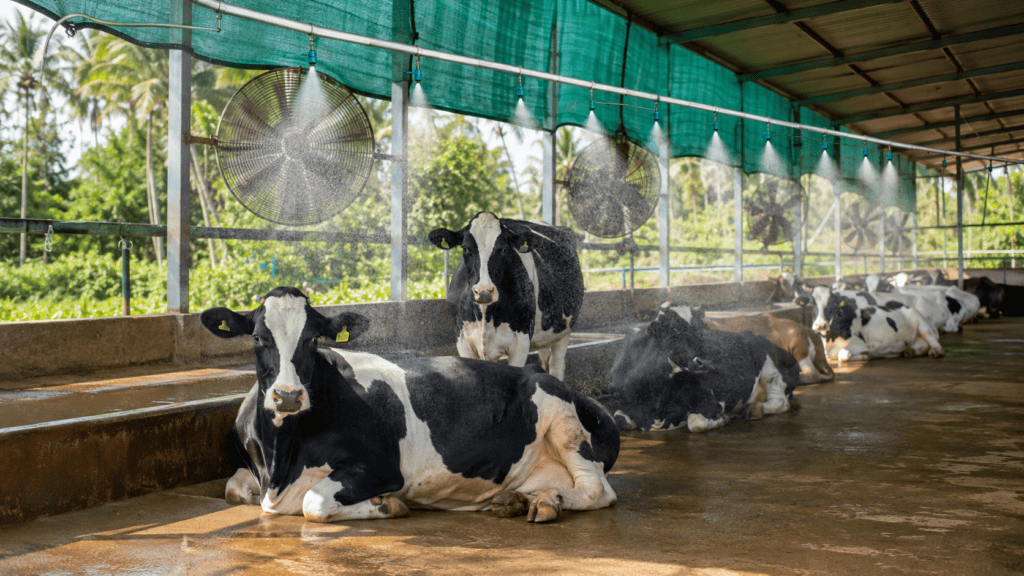
Summer is the most challenging season for dairy animals in India. Temperatures can soar above 45°C in many regions.
Summer Challenges:
| Problem | Effect on Animals | Economic Loss |
|---|---|---|
| Heat Stress | Panting, reduced appetite | 20-25% milk drop |
| Dehydration | Thick blood, poor circulation | Health issues |
| Low Feed Intake | 15-20% less consumption | Weight loss |
| Reduced Fertility | Poor conception rates | Delayed calving |
Summer Management Solutions:
1. Housing & Ventilation
| Action | How to Implement | Cost | Effectiveness |
|---|---|---|---|
| Install Foggers/Misters | Spray water every 15-20 min | ₹20,000-40,000 | ⭐⭐⭐⭐⭐ |
| Exhaust Fans | 2-4 fans in shed | ₹10,000-20,000 | ⭐⭐⭐⭐ |
| Green Net/Shade Cloth | Cover roof & sides | ₹5,000-10,000 | ⭐⭐⭐⭐ |
| White Roof Painting | Reflect sunlight | ₹2,000-3,000 | ⭐⭐⭐ |
| Wet Gunny Bags | Hang on walls | 500-1,000 | ⭐⭐⭐ |
2. Water Management (Most Critical!)
| Requirement | Summer | Normal Season |
|---|---|---|
| Water per Animal | 80-100 liters/day | 50-60 liters/day |
| Water Temperature | Cool (below 25°C) | Normal |
| Trough Cleaning | 3-4 times/day | 2 times/day |
| Water Points | Multiple locations | Standard |
Pro Tips:
- ✅ Add ice cubes to water during peak heat (12-4 PM)
- ✅ Provide water in shade, never in direct sunlight
- ✅ Check water temperature – animals won’t drink if >30°C
- ✅ Add electrolytes (₹5-10/animal/day) to prevent dehydration
3. Feed Management in Summer
| Strategy | Implementation | Benefit |
|---|---|---|
| Feed During Cool Hours | Early morning (5-7 AM) & evening (7-9 PM) | 20% better intake |
| Increase Concentrates | Add 10-15% more energy feed | Maintain production |
| Green Fodder | Maize, sorghum (high water content) | Hydration + nutrition |
| Avoid Heating Feeds | Reduce mustard cake, increase cottonseed | Less body heat |
| Feed Additives | Vitamin C, niacin, chromium | Reduce heat stress |
4. Health Care in Summer
- Bathing: 2-3 times daily with cold water
- Udder Care: Apply coconut oil to prevent cracking
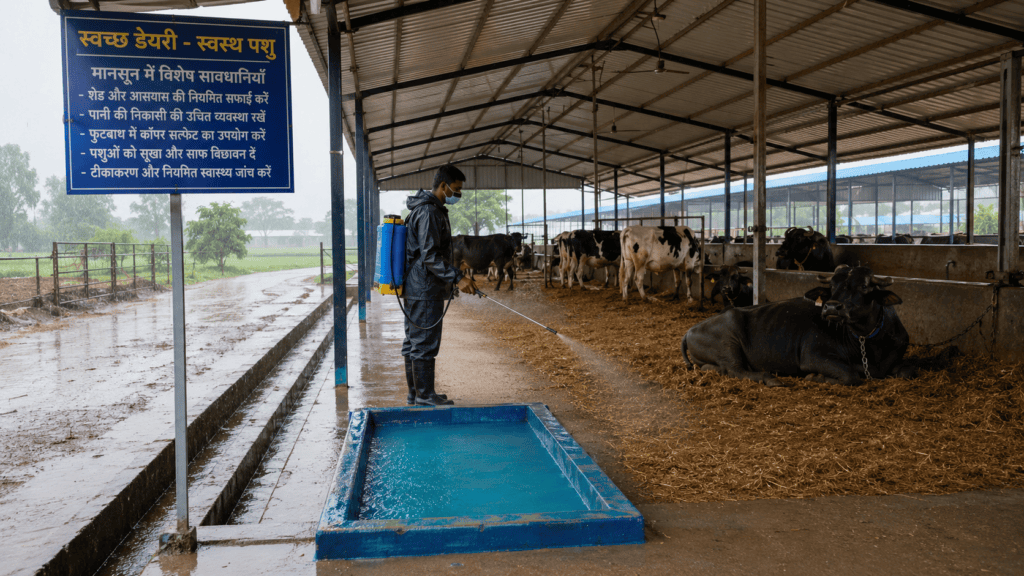
- Foot Care: Weekly foot bath with copper sulfate
- Vaccination: Ensure HS (Hemorrhagic Septicemia) vaccine before summer
- Parasite Control: Deworm every 2 months
PART 2: MONSOON MANAGEMENT (July – September)
Monsoon brings high humidity and heavy rains, creating perfect conditions for diseases.
Monsoon Challenges:
| Challenge | Impact | Prevention Cost |
|---|---|---|
| Foot & Mouth Disease | Highly contagious | ₹200-500/animal (vaccine) |
| Foot Rot | Lameness, pain | ₹1,000-3,000/treatment |
| Mastitis | Udder infection | ₹500-2,000/treatment |
| Feed Spoilage | Fungal growth | ₹5,000-10,000 loss |
| Mosquito-Borne Diseases | LSD, FMD spread | Prevention essential |
Monsoon Management Solutions:
1. Shed & Drainage
| Action | Frequency | Cost |
|---|---|---|
| Clean Drains | Daily | Labor only |
| Disinfect Shed | Twice weekly | ₹500-1,000/week |
| Dry Bedding | Change daily | ₹200-300/day |
| Repair Roof Leaks | Before monsoon | ₹2,000-5,000 |
| Raise Floor Level | If waterlogging | ₹10,000-20,000 |
2. Disease Prevention
Vaccination Schedule (Monsoon):
| Disease | Vaccine | Timing | Cost |
|---|---|---|---|
| Foot & Mouth Disease | FMD vaccine | June (before monsoon) | ₹15-25/dose |
| Hemorrhagic Septicemia | HS vaccine | May-June | ₹10-15/dose |
| Black Quarter | BQ vaccine | May-June | ₹8-12/dose |
| Lumpy Skin Disease | LSD vaccine | Before monsoon | ₹20-30/dose |
3. Foot Care (Critical in Monsoon!)
- Foot Bath: 4% copper sulfate solution, 2-3 times/week
- Dry Standing Area: Provide raised platform
- Regular Trimming: Before monsoon starts
- Early Treatment: At first sign of lameness
4. Feed Management in Monsoon
| Challenge | Solution |
|---|---|
| Fodder shortage | Store silage/hay before monsoon |
| Feed spoilage | Use airtight containers, add antifungal |
| Moldy fodder | NEVER feed moldy fodder – causes abortion |
| Low dry matter | Increase concentrate by 10% |
PART 3: WINTER MANAGEMENT (October – February)
Winter brings cold stress, especially in North India where temperatures drop to 0-5°C.
Winter Challenges:
| Problem | Effect | Regions Affected |
|---|---|---|
| Cold Stress | Energy diverted to warmth | North India, Hills |
| Respiratory Diseases | Pneumonia, cough | All regions |
| Reduced Water Intake | Dehydration, constipation | Cold regions |
| Lower Milk Fat | Energy deficiency | All regions |
Winter Management Solutions:
1. Housing Adjustments
| Action | Implementation | Cost |
|---|---|---|
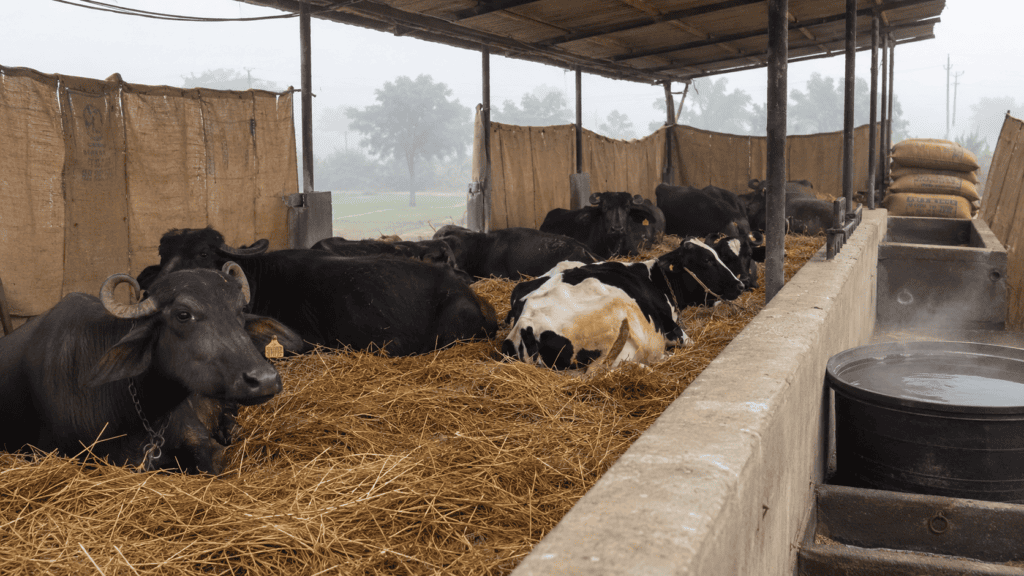
| Close Open Sides | Use gunny bags/polythene sheets | ₹2,000-3,000 |
| Thick Bedding | Paddy straw, sawdust (6-8 inches) | ₹300-500/week |
| Block Cold Winds | Windbreakers on north side | ₹5,000-10,000 |
| Keep Shed Dry | Remove wet bedding immediately | Labor only |
2. Feed Management in Winter
| Strategy | How | Benefit |
|---|---|---|
| Increase Energy | Add 15-20% more concentrates | Body warmth + production |
| Warm Water | Lukewarm water (25-30°C) | Better intake |
| Green Fodder | Berseem, oats (winter crops) | High nutrition |
| Feed Timing | After morning milking, before evening | Maximize intake |
| Vitamin A & D | Supplementation (less sunlight) | Bone health, immunity |
3. Health Care in Winter
- Vaccination: Ensure all vaccines are up-to-date before winter
- Respiratory Care: Watch for cough, nasal discharge
- Calf Care: Extra critical – use calf jackets
- Milking: Dry teats thoroughly to prevent frostbite
- Exercise: Allow movement during sunny hours
Year-Round Seasonal Calendar
| Month | Season | Priority Actions |
|---|---|---|
| March-May | Summer Prep | Install foggers, check water system, HS vaccine |
| June-September | Monsoon | FMD vaccine, drainage, foot care, disinfection |
| October-November | Winter Prep | Close shed, stock bedding, increase feed |
| December-February | Winter | Warm water, thick bedding, respiratory care |
Cost-Benefit Analysis
Investment in Seasonal Management vs Loss Prevention:
| Season | Management Cost/Month | Loss Without Management | Net Benefit |
|---|---|---|---|
| Summer | ₹3,000-5,000 | ₹15,000-20,000 | ₹10,000-15,000 saved |
| Monsoon | ₹2,000-4,000 | ₹20,000-30,000 | 16,000-26,000 saved |
| Winter | ₹2,500-4,000 | 10,000-15,000 | ₹6,000-11,000 saved |
| TOTAL/YEAR | ₹90,000-1,56,000 | ₹5,40,000-7,80,000 | ₹3,24,000-6,24,000 saved! |
Conclusion: Plan Ahead, Profit Year-Round!
Seasonal management is not an expense – it’s an investment that pays for itself many times over.
Key Takeaways:
- ✅ Prepare BEFORE the season starts, not after
- ✅ Small investments prevent big losses
- ✅ Consistent milk production = consistent income
- ✅ Healthy animals = lower veterinary costs
- ✅ Happy animals = better production
Remember: “The best time to prepare for summer is in winter, and the best time to prepare for winter is in summer!”
Need Help Managing Your Dairy Farm Year-Round?
Seasonal management requires careful tracking and planning. PerfElite Dairy Management Software helps you:
- ✅ Track seasonal production trends
- ✅ Schedule vaccinations and health care
- ✅ Monitor feed consumption by season
- ✅ Generate seasonal performance reports
- ✅ Set reminders for seasonal preparations
Book Your FREE Demo Today and optimize your dairy farm for all seasons!
️ Disclaimer
The information provided in this article is for educational purposes only. Actual results may vary based on location, breed, management practices, and climate conditions. We recommend consulting with local veterinary experts and agricultural advisors before implementing seasonal management strategies. PerfElite is not responsible for any losses or damages resulting from the use of this information.
Frequently Asked Questions (FAQs)
Q1: How much does seasonal management cost?
A: For 10 animals, expect ₹3,000-5,000/month during peak seasons. This prevents losses of ₹15,000-30,000/month, giving you 5-6x ROI.
Q2: Which season is most challenging for dairy farming?
A: Summer is most challenging due to heat stress, followed by monsoon due to disease outbreaks. Winter is relatively easier to manage.
Q3: How can I reduce heat stress in summer?
A: Install foggers/misters, provide cool water (80-100L/animal), feed during cool hours (early morning/evening), and ensure proper ventilation.
Q4: What vaccines are essential before monsoon?
A: FMD (Foot & Mouth Disease), HS (Hemorrhagic Septicemia), BQ (Black Quarter), and LSD (Lumpy Skin Disease) vaccines are essential. Get them 2-3 weeks before monsoon.
Q5: Can I maintain milk production year-round?
A: Yes! With proper seasonal management, you can maintain 90-95% of peak production year-round, compared to 70-80% without management.
Q6: How do I prevent foot rot in monsoon?
A: Use foot bath with 4% copper sulfate 2-3 times/week, keep shed dry, provide raised standing area, and trim hooves before monsoon.
Q7: Is winter management necessary in South India?
A: South India has mild winters, so minimal management is needed. Focus on summer and monsoon management instead.
Q8: How much water do animals need in summer?
A: 80-100 liters per animal per day in summer (compared to 50-60L in normal season). Provide cool, clean water at all times.
About the Author: This comprehensive guide is brought to you by PerfElite Dairy Management Software – helping dairy farmers across India optimize year-round production through smart seasonal management.
Related Articles: